.png)
msc Best Practices
Best Practices
Skill to Scale: Experiential Biotechnology Learning through Hands-on VAPs and Workshops
Department of Biotechnology & Genetics
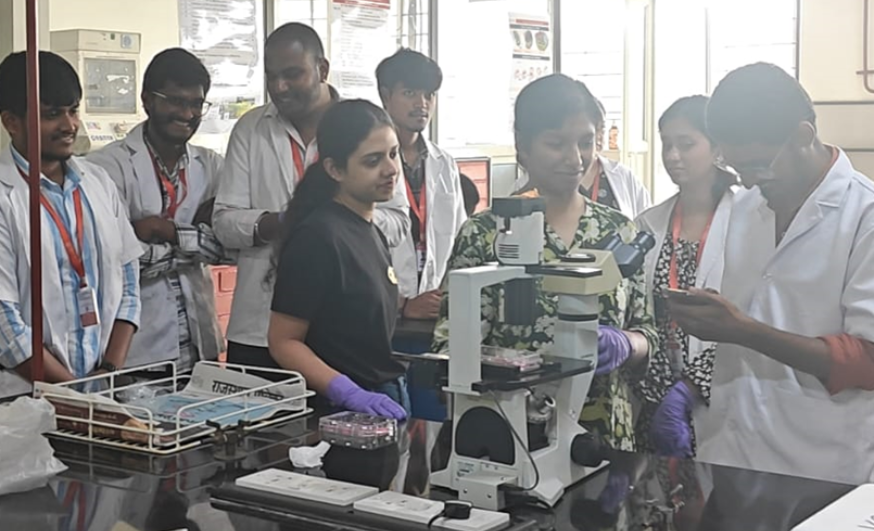
The Department of Biotechnology & Genetics at M. S. Ramaiah College of Arts, Science and Commerce (MSRCASC) implements a best practice titled “Skill to Scale: Experiential Biotechnology Learning through Hands-on VAPs and Workshops” to enhance student competencies through practical, research-oriented training aligned with NAAC quality standards. Through two Value Added Programs and two hands-on workshops, the department provides UG, PG, and PU students with exposure to advanced biotechnology domains such as bioinformatics, genomics, mammalian cell culture, molecular biology, and emerging tools like CRISPR, combining demonstrations, guided practice, and assessments. This initiative bridges the gap between theoretical knowledge and laboratory skills, fosters scientific thinking and independence, and prepares students for research, internships, and employment. Despite challenges like limited batch sizes and high operational costs, the program has achieved strong student participation, improved technical proficiency, positive feedback, and enhanced academic and career outcomes, with plans for further expansion and industry collaboration.
Best Practice in Action: Research-Oriented Laboratory Learning
Department of Biotechnology & Genetics
The Department of Biotechnology & Genetics has implemented a research-oriented best practice to enrich undergraduate laboratory learning by integrating recent research trends in Life Sciences during regular laboratory sessions, utilizing additional time after the completion of scheduled practical experiments. This initiative is designed for B.Sc. final-year students to enhance academic engagement beyond the prescribed syllabus.
During laboratory sessions, students are guided to identify emerging topics and new discoveries in areas such as biotechnology, genetics, molecular biology, and allied disciplines. With faculty mentorship, students perform a basic review of current scientific literature to understand the relevance and applications of recent research developments.
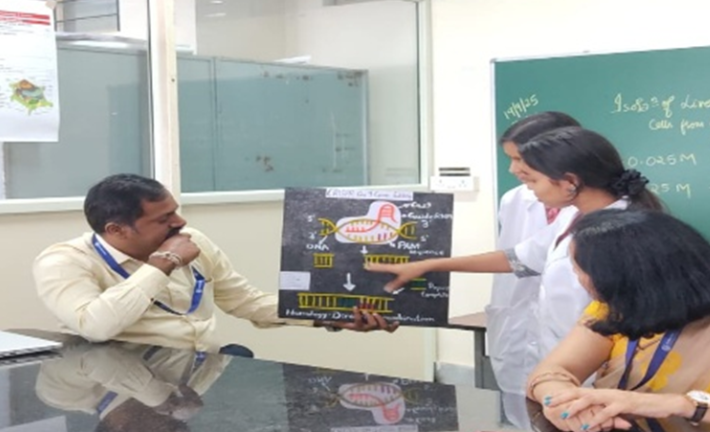
Students present their findings through charts, posters, and models, followed by oral presentations during laboratory hours. This structured approach promotes scientific communication, critical analysis, and peer learning, while strengthening conceptual understanding and presentation skills.
Faculty members act as facilitators, providing academic guidance and feedback throughout the activity. The initiative supports the development of research awareness, confidence, teamwork, and analytical thinking among students.
Outcome
The practice has resulted in improved student participation, enhanced communication skills, and increased awareness of contemporary research in Life Sciences. It effectively bridges theoretical learning with current scientific advancements, preparing students for higher education and research-oriented careers.