A journal club is an essential academic platform that can significantly enhance the learning experience of postgraduate students at M.S. Ramaiah College of Arts, Science and Commerce (MSRCASC). PG programs demand higher-order thinking, critical analysis, and familiarity with current research trends. A structured journal club provides students the opportunity to read, analyze, and present recent scientific articles, helping them develop strong research literacy. It trains students to evaluate methodologies, understand data interpretation, identify research gaps, and appreciate innovations in their field.
Starting a journal club also strengthens communication and presentation skills, as students regularly discuss and debate research findings. This builds confidence, teamwork, and intellectual curiosity. Moreover, it encourages a culture of continuous learning, keeping students updated with the latest advancements, technologies, and industry practices.
Journal clubs also support dissertation and project work by exposing students to diverse research designs, literature review techniques, and academic writing styles. Faculty members can use this platform to mentor students more effectively, fostering stronger academic bonding.
Overall, establishing a journal club at MSRCASC will promote research awareness, improve analytical abilities, prepare students for academic and corporate careers, and help create a vibrant research ecosystem within the campus. It will be a valuable addition to the PG learning environment.
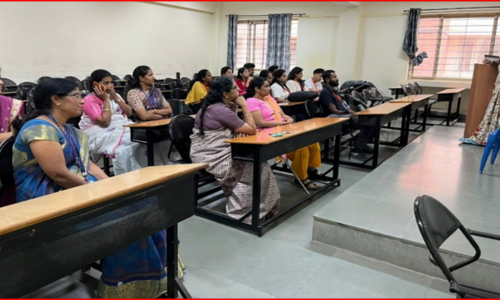
Dr. Swetha P., Assistant Professor, Department of Microbiology, delivered a presentation titled “Microbial Allies of Sandalwood: Molecular and Functional Insights into Endophyte-Mediated Disease Management” on 30-10-2025 at Level 4, Room 402 for the M.Sc. Microbiology students. She presented her Ph.D. research work to inspire students and provide them with a clear understanding of how scientific research is planned, executed, and translated into real-world impact. The session highlighted the crucial role of endophytic microorganisms in managing sandalwood diseases, the scientific approaches used for molecular and functional characterization, and how such research benefits the farming community. She also emphasized the importance of publishing high-quality research papers and how publications contribute to scientific credibility and career growth.
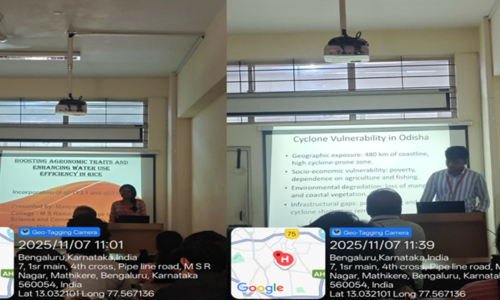
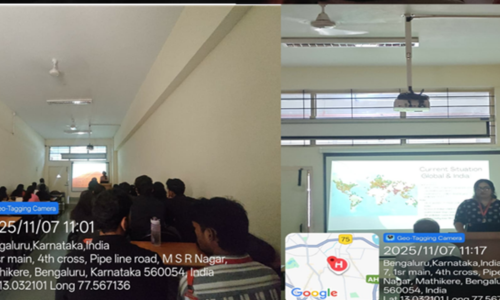
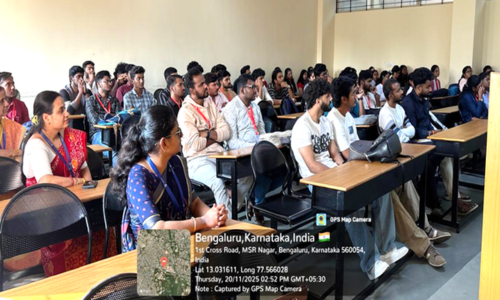
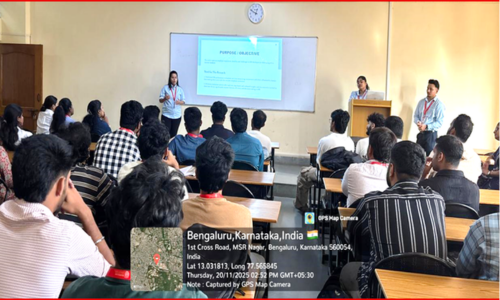
On Friday, 7th November 2025, six M.Sc. Biotechnology III Semester students delivered well-prepared presentations on selected review articles in Room 407 from 10:30 a.m. to 12:20 p.m. The session provided a platform for them to showcase their understanding of current biotechnology research. Each student presented with clarity and confidence, effectively summarizing key concepts, recent advancements, and critical insights from the literature. The event was attended by Prof. Channarayappa, Research Head, Dr. Jayashree, Head of the Department, and faculty members Dr. Muktha H., Dr. Pratheek, and Dr. Promod, who offered constructive feedback. The faculty appreciated the students’ analytical depth and communication skills. Overall, the session was enriching and boosted students’ confidence in engaging with scientific literature.
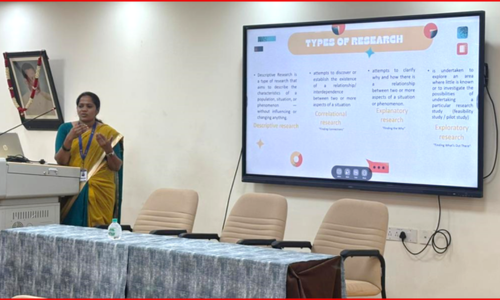
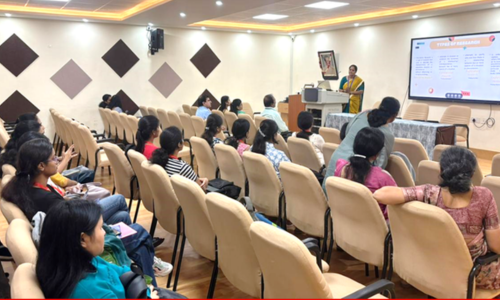
MSRCASC Journal Club program was held on 13 November 2025 at 3:30 PM in the Kuvempu Seminar Hall. The session featured a talk by Dr. Nandini S., Assistant Professor, Department of Chemistry and Biochemistry, titled “Introduction to Research: General Concepts.” The audience included M.Sc. students from Biochemistry, Chemistry, Biotechnology, and Microbiology. Dr. Nandini covered essential research fundamentals, including problem formulation, literature review methods, research design, data interpretation, scientific writing, research ethics, and the publication process. Students gained clarity on selecting research topics, structuring dissertations, and planning experiments. The session emphasized critical thinking, accuracy, and interdisciplinary approaches. A Q&A segment allowed students to address queries on research projects, publications, and career pathways.
The Journal Club members of MSRCASC organized a talk on “Exploration of Novel Marine Biologics,” delivered by Dr. Channarayappa, Head of Research and Development, MSRCASC. Held on November 20, 2025, at the Kuvempu Seminar Hall, the session attracted both students and faculty. Dr. Channarayappa began by highlighting the importance of exploration and scientific expeditions, relating them to India’s agricultural growth through the introduction of new crop cultivars. He also drew parallels with the Matsya and Koorma avatars, symbolizing the extraction of valuable resources from the oceans. The speaker emphasized the ocean as a rich reservoir of biodiversity containing unique organisms, biochemical compounds, metabolic pathways, and defence mechanisms. He further discussed key areas of marine biotechnology, including nutraceuticals, pharmacology, cosmetics, sustainable marine agriculture, seafood supply, environmental biotechnology, marine bioenergy, industrial enzymes, and conservation. Participants found the talk insightful, relevant, and highly informative.
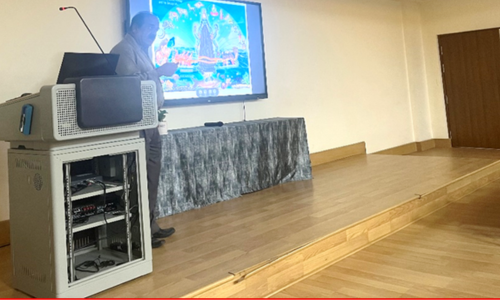
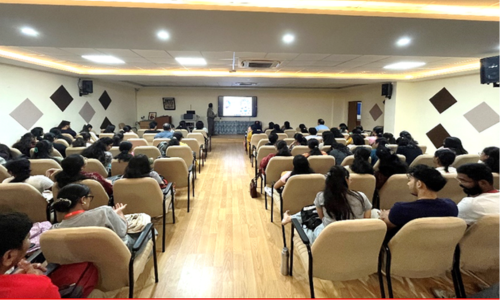
The Journal Club organized a student’s presentation on November 20th 2025, paper entitled “Strategic Role of Artificial Intelligence (AI) on HR Employee Performance Evaluation” presented by Vaishnavi, Divyashree, and Kaushal final year MBA students under Dr. Pallavi Padhy, the session highlighted that manual evaluations are slow, subjective, and often inconsistent. In contrast, AI-based tools such as machine learning and sentiment analysis provide faster, accurate, and objective assessments. AI supports real-time feedback, continuous monitoring, and early identification of performance gaps, improving decision-making and employee motivation. The paper stresses the need for ethical data use and responsible AI adoption. Students learned that modern HR is becoming data-driven, requiring analytics skills and creating new career roles like HR Analyst and HR Tech Specialist.
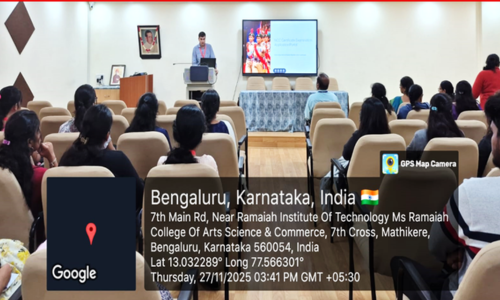
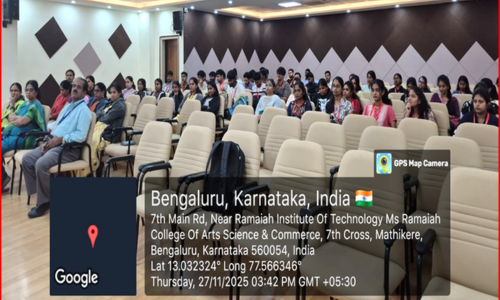
The MSRCASC Journal Club organized a presentation by Shreyash Bhardwaj (MCA 3rd Semester) on “Government Website Development Project” for MCA 1st Semester students on Thursday, 27 November 2025 at the Kuvempu Seminar Hall. Shreyash discussed the development of an Online Exam Portal for the Odisha NCC Directorate 13(O) BN, designed to help cadets from remote and Naxalite-affected regions who face difficulties traveling for exams. The session highlighted how research principles guide technical projects starting from identifying real field problems, gathering requirements, analyzing system gaps, and designing evidence-based, secure digital solutions. Through this activity, students gained insights into applying research for solving real-world challenges, improving their skills in analysis, problem-solving, and professional technical presentation.
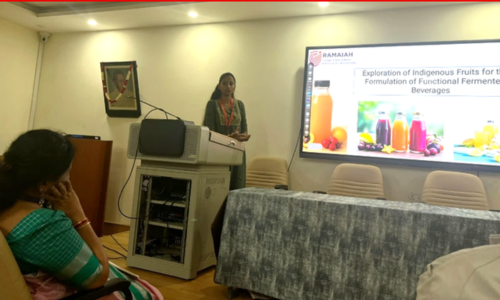
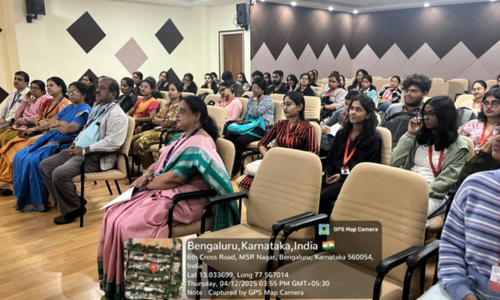
Chejarla Rajasree, a 2nd year M.Sc. Microbiology student, delivered a synopsis presentation of her project titled “Exploration of Indigenous Fruits for the Formulation of Functional Fermented Beverages” on 04-12-2025 as part of the Journal Club activity. The presentation was given under the guidance of Dr. Savitha J, Dr. Sudha K.V., and Dr. Yashaswini M.S. She provided an overview of her research objectives, emphasizing the potential of locally available fruits in developing nutritionally enriched fermented beverages. The session offered insights into the scientific rationale behind selecting indigenous fruits, the methodological approaches involved in formulation and fermentation, and the broader relevance of such value-added products in the functional food industry. Her presentation also highlighted the significance of research-oriented learning and how project-based work enhances scientific thinking, technical skills, and future research opportunities for postgraduate students.
.png)
.png)