.png)
computer_labs
LABORATORIES
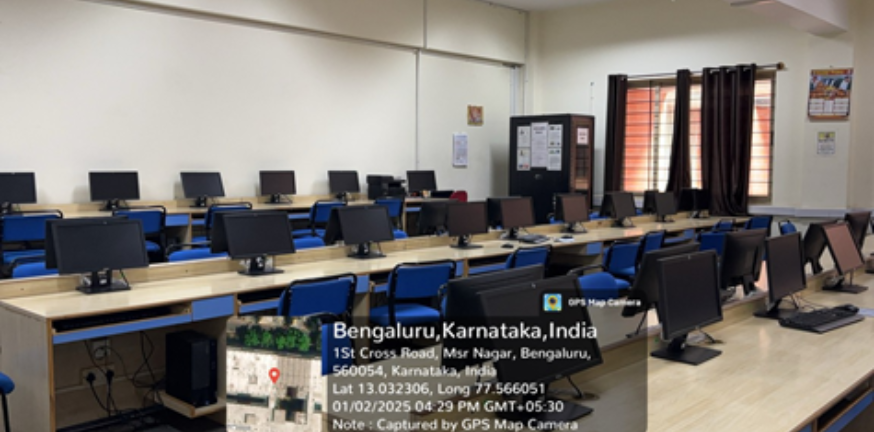
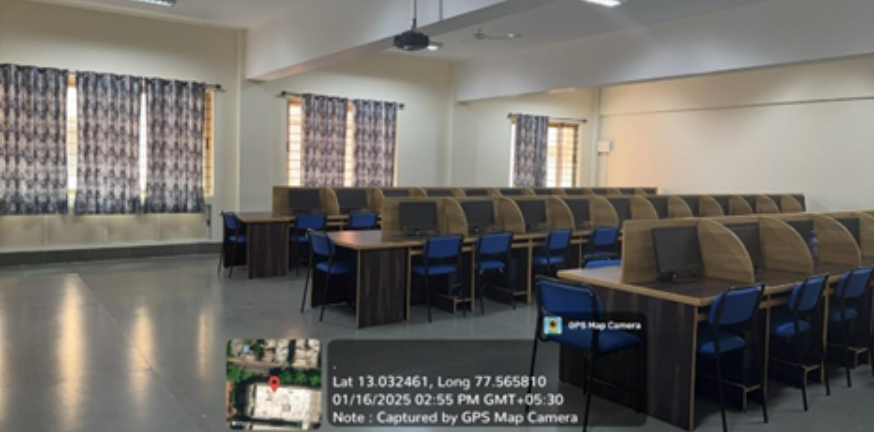
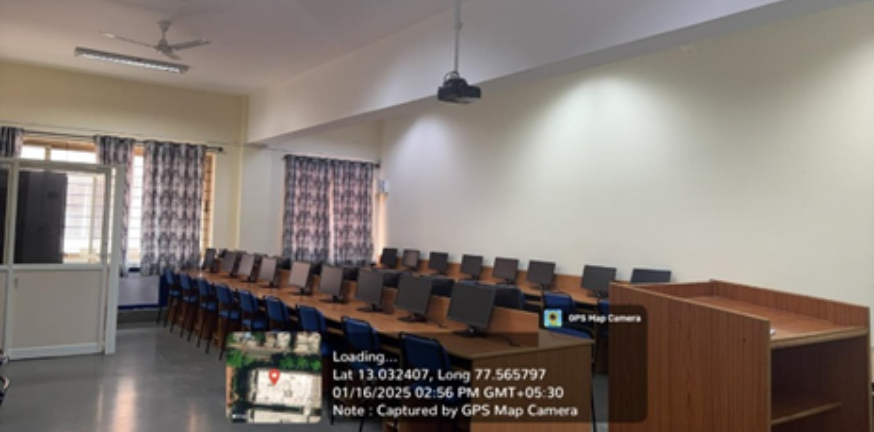
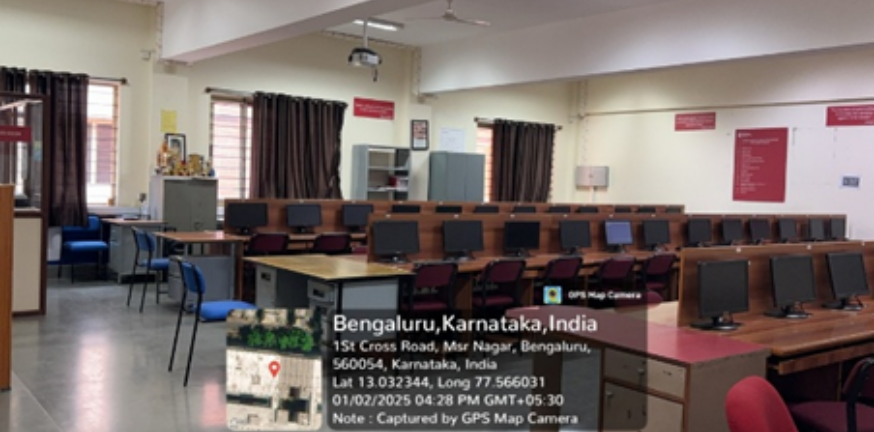
Ramaiah College of Arts, Science, and Commerce (RCASC) recognizes the vital role of information technology (IT) in today’s educational environment. The college has made significant investments in state-of-the-art IT infrastructure to foster a dynamic and secure learning atmosphere.
The entire campus has more than 400 computers and is equipped with extensive Wi-Fi coverage, enabling students and faculty to effortlessly access online resources and collaborate on academic projects.
RCASC’s well-equipped server rooms are the cornerstone of its IT framework, supporting critical data, applications, and services required for both academic and administrative operations. These facilities are carefully maintained to guarantee the consistent availability and reliability of IT resources.
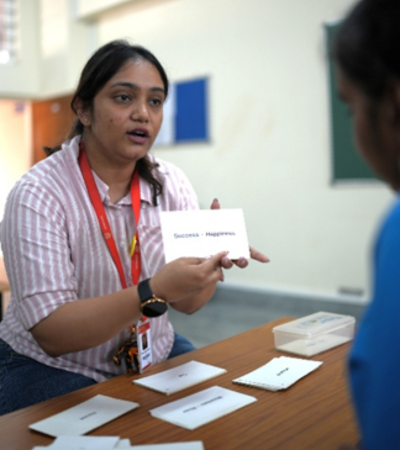
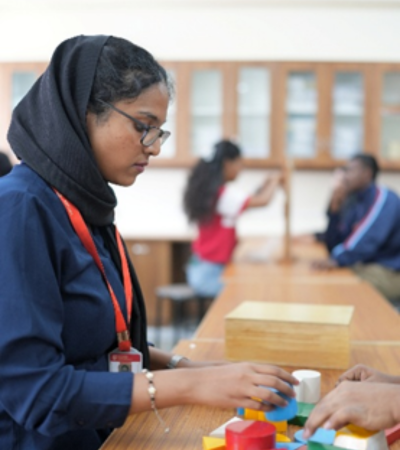
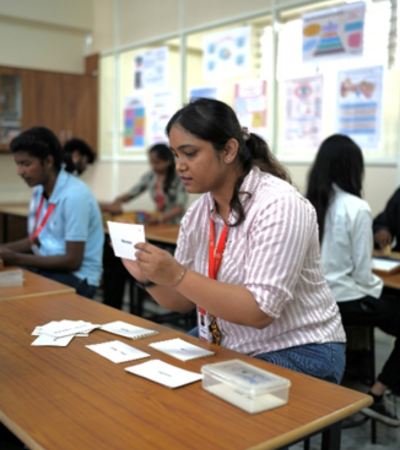
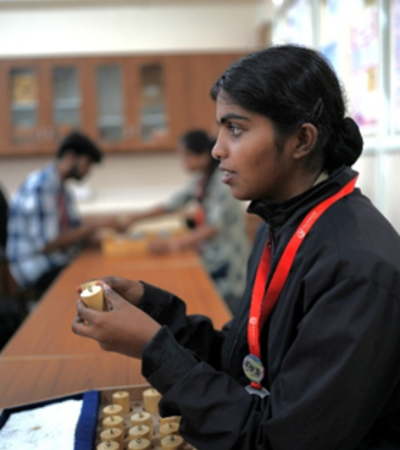
The Psychology Lab at our college is a well-equipped and student-friendly space designed to support practical learning and psychological research.
It provides a calm and organized environment where students can conduct experiments, assessments, and observations related to human behavior and mental processes.
The lab contains standard psychological tools and materials that help students gain hands-on experience, enhance analytical skills, and connect theoretical concepts with real-world applications. Overall, the lab plays an important role in developing students’ practical understanding of psychology.
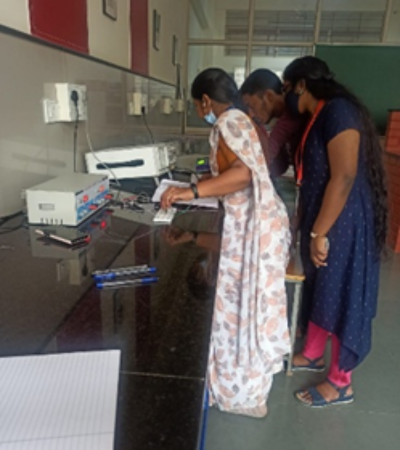
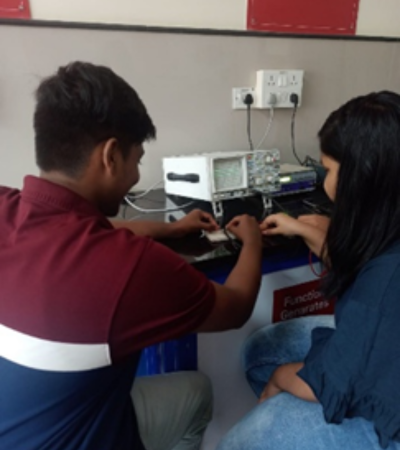
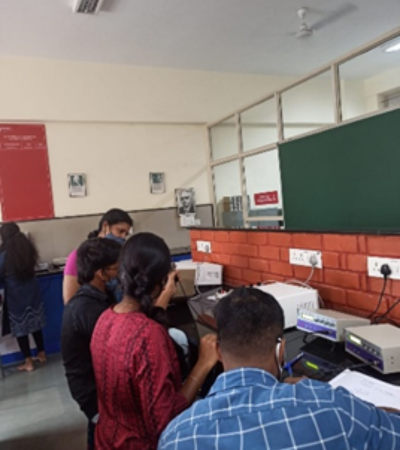
The Electronics Laboratory is a well-equipped facility that provides students with practical exposure to modern electronic systems and technologies.
The lab includes microcontroller kits that enable students to design, program, and test embedded system applications. Digital CROs are available for accurate observation and analysis of electronic signals and waveforms.
The instrumentation kits help students understand measurement systems, signal conditioning, and data acquisition techniques. The laboratory also features Raspberry Pi platforms, allowing students to work on programming, networking, and IoT-based projects.
Through hands-on experiments, students strengthen their understanding of core electronics concepts. The lab encourages innovation, analytical thinking, and problem-solving skills. It supports academic coursework, mini projects, and research-oriented activities. Overall, the Electronics Laboratory prepares students for industry and higher studies in electronics and related fields.
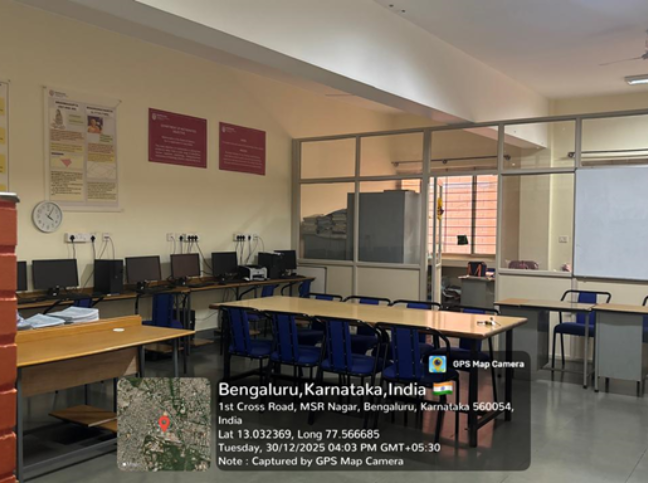
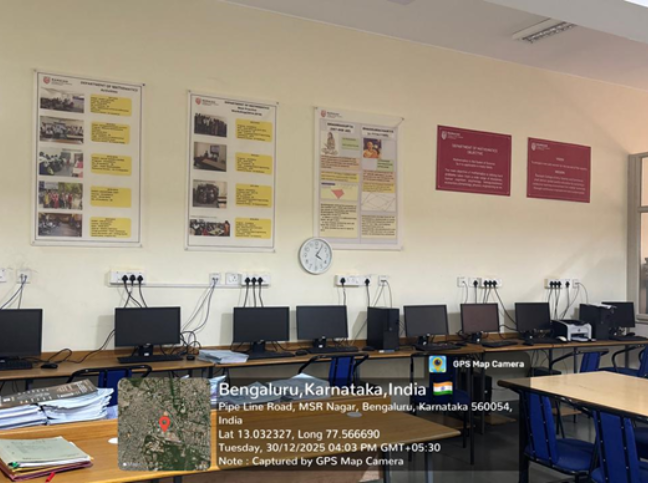
The Mathematics Laboratory is an integral part of the B.Sc. curriculum, providing practical exposure to support theoretical learning. It is primarily computer-based and focuses on the use of mathematical software such as Python.
This laboratory enables students to apply mathematical concepts through computation, simulation, and visualization. It includes experiments related to numerical methods such as solving algebraic and differential equations, numerical integration, and matrix computations, along with eigenvalue problems and various linear algebra techniques.
The laboratory enables students to apply concepts through numerical methods, simulations, and graphical visualizations. It also introduces probability, statistics, and mathematical modeling of real-world problems.
Overall, the lab bridges the gap between abstract theory and practical application while developing computational and analytical skills.